The moment of key handover is where many property transactions run into avoidable complications. A buyer expects a specific sofa to be there. The seller thought it was excluded from the sale. The washing machine is missing. The outdoor furniture that was in the listing photos is gone. Without a signed document at the point of transfer, there's no objective reference — only two conflicting accounts.
A property handover inventory solves this problem. It's one of the simplest documents in a real estate transaction, but its absence can turn a clean completion into a prolonged dispute. Here's what it is, when you need it, and how to create one in minutes — free.
What is a property handover inventory?
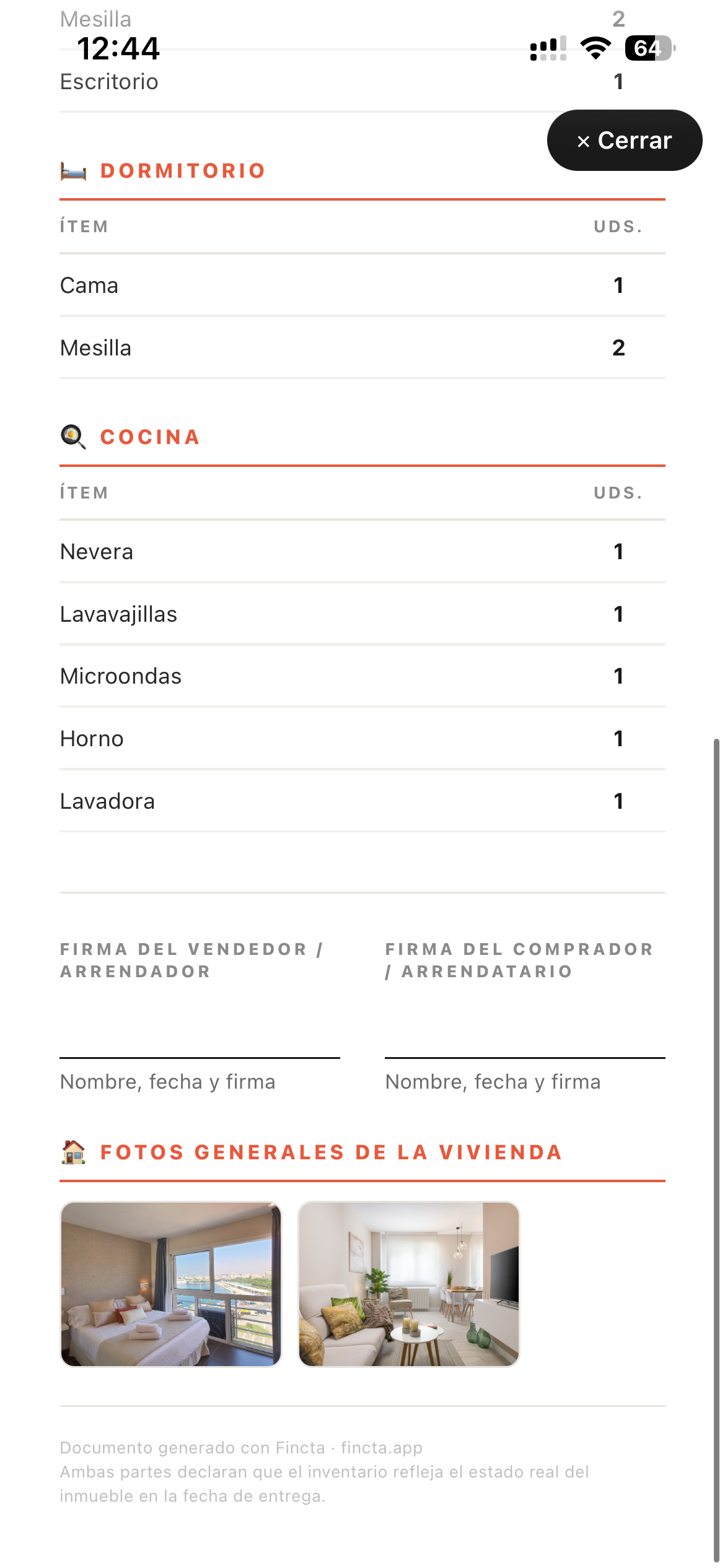
A property handover inventory is a written document, signed by both parties at the moment of key handover, that lists all the furniture, appliances, and contents included with the property. It describes what is present, in what quantity, and ideally in what condition — and it's supported by photos of each room.
The key word is signed. An unsigned inventory is just a list. A signed inventory is a contractual record that both parties have acknowledged the contents of the property at a specific point in time. That signature is what gives it practical and legal weight.
When do you need a property handover inventory?
The honest answer is: any time a property changes hands and there's anything inside it worth documenting. In practice, the most common situations are:
- Furnished property sale: Any sale where furniture, white goods, or appliances are included in the purchase price. This is especially common in holiday properties, coastal properties sold to foreign buyers, and investment properties sold with contents.
- Rental property handover: Both at the start and end of a tenancy. The move-in inventory protects the landlord from claims that damage was pre-existing; the move-out inventory compared against it protects the tenant from unfair deposit deductions.
- Any property transfer with contents included: Even if the property is mostly unfurnished, if white goods, a fitted kitchen, or specific fixtures are included, documenting them protects everyone involved.
Tip for agents: Even when clients say "it's fine, we trust each other" — get the inventory signed. Post-handover disputes are almost always between people who trusted each other. Your job is to protect both parties and your own reputation as the agent.
What to include in a property handover inventory
A complete handover inventory has five components. Skip any of them and you're leaving gaps that can be exploited in a dispute.
- Property details and handover date: Full address, both parties' names, and the exact date and time of handover.
- Room-by-room list of furniture and appliances: Every room is its own section. Every item in that room is listed with its name and — if relevant — make and model.
- Quantities: Not just "chairs" — "4 dining chairs" or "2 bedside lamps." Quantities are what get disputed, not item names.
- Photos of each room: Taken at the handover meeting, not from the listing photos. The date stamp matters. At least one wide-angle photo per room, plus close-ups of any items with existing damage.
- Signature fields for both parties: Name, signature, and date for both buyer and seller (or landlord and tenant). Both parties get a copy.
How to create your property handover inventory free
Fincta includes a built-in inventory module that lets you create, fill in, and export a complete handover inventory from your phone during the handover meeting itself. No laptop needed, no template to format, no photos to attach manually.
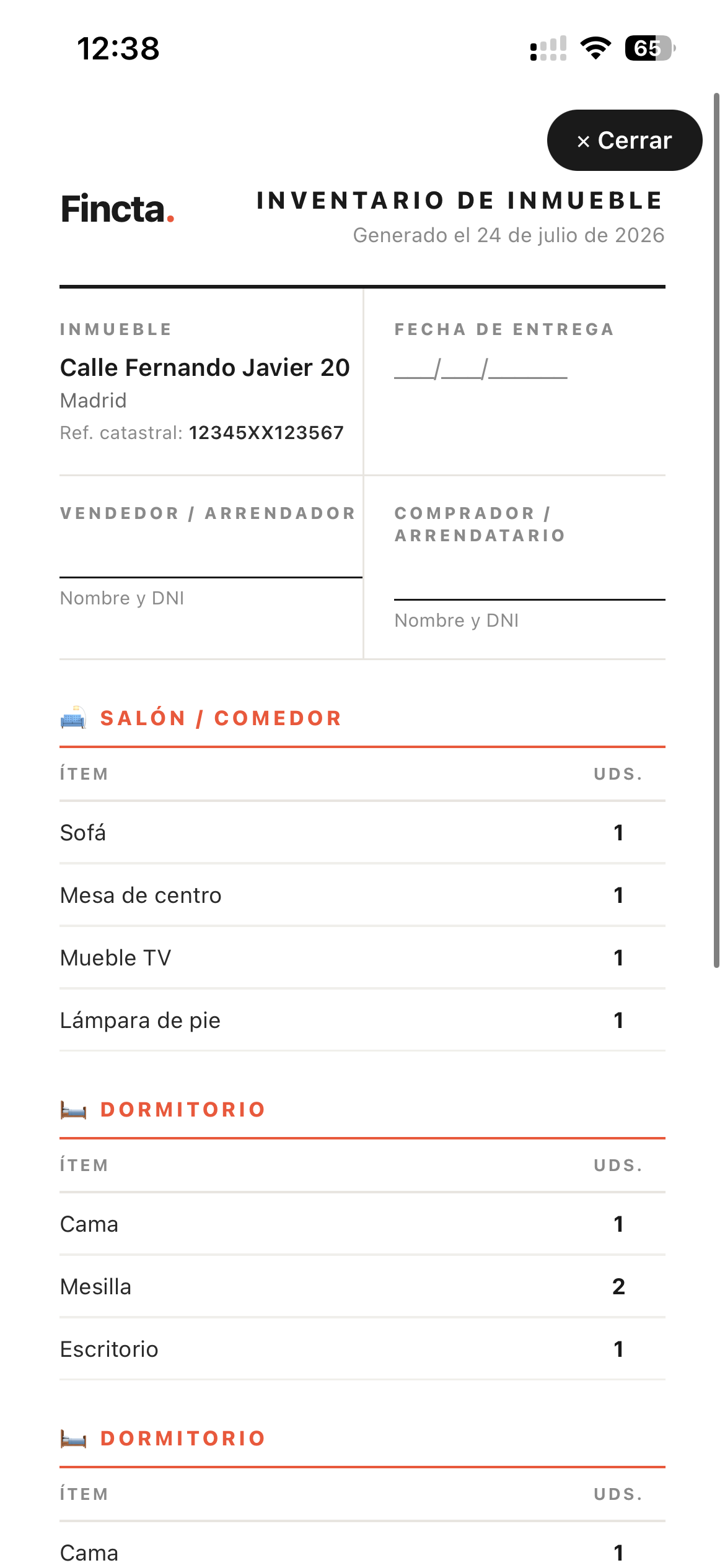
In Fincta, navigate to the property and tap the 📋 Inventario button. This opens the inventory module directly linked to that property.
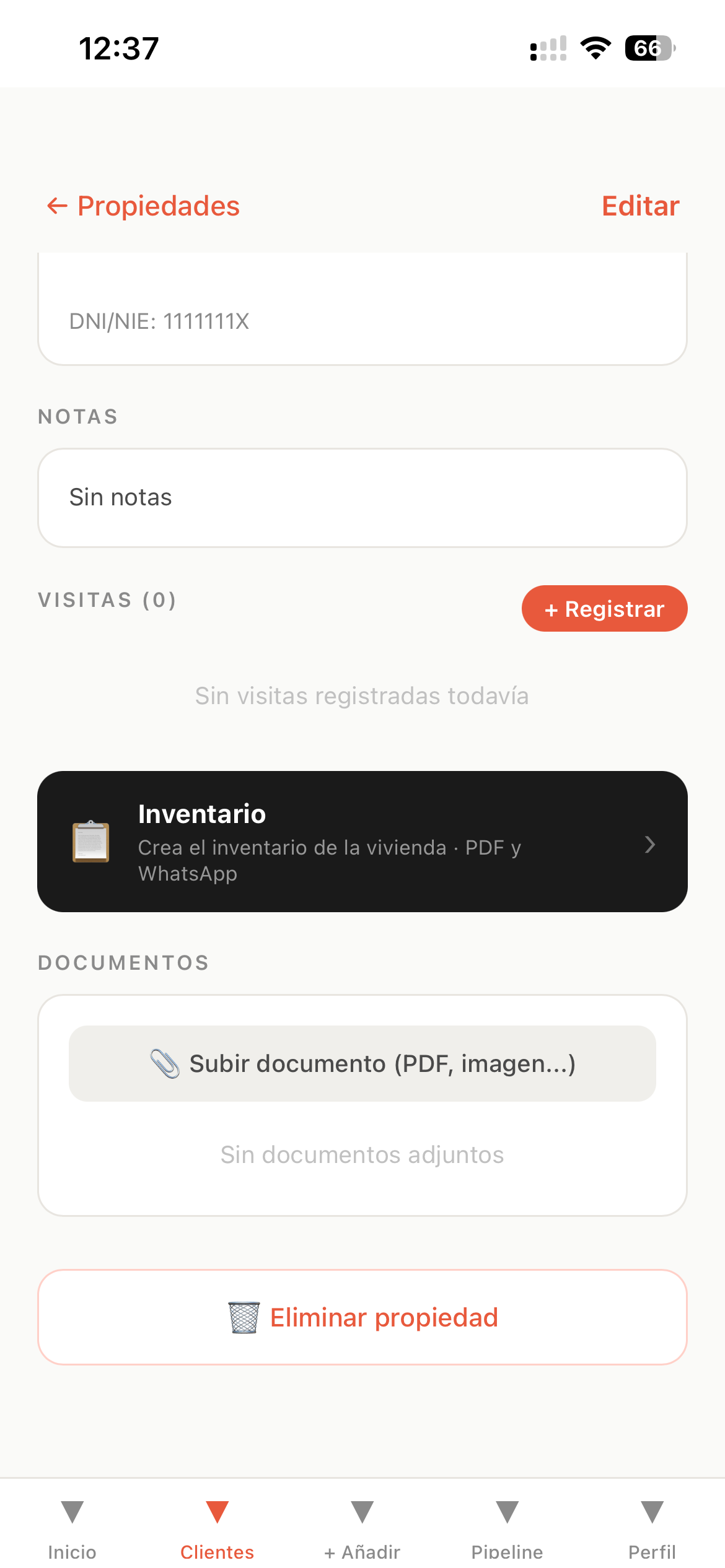
Create a section for each room in the property. Within each section, add the individual furniture and appliances. Walk through the property room by room and fill it in as you go — the whole process takes less time than writing on paper.
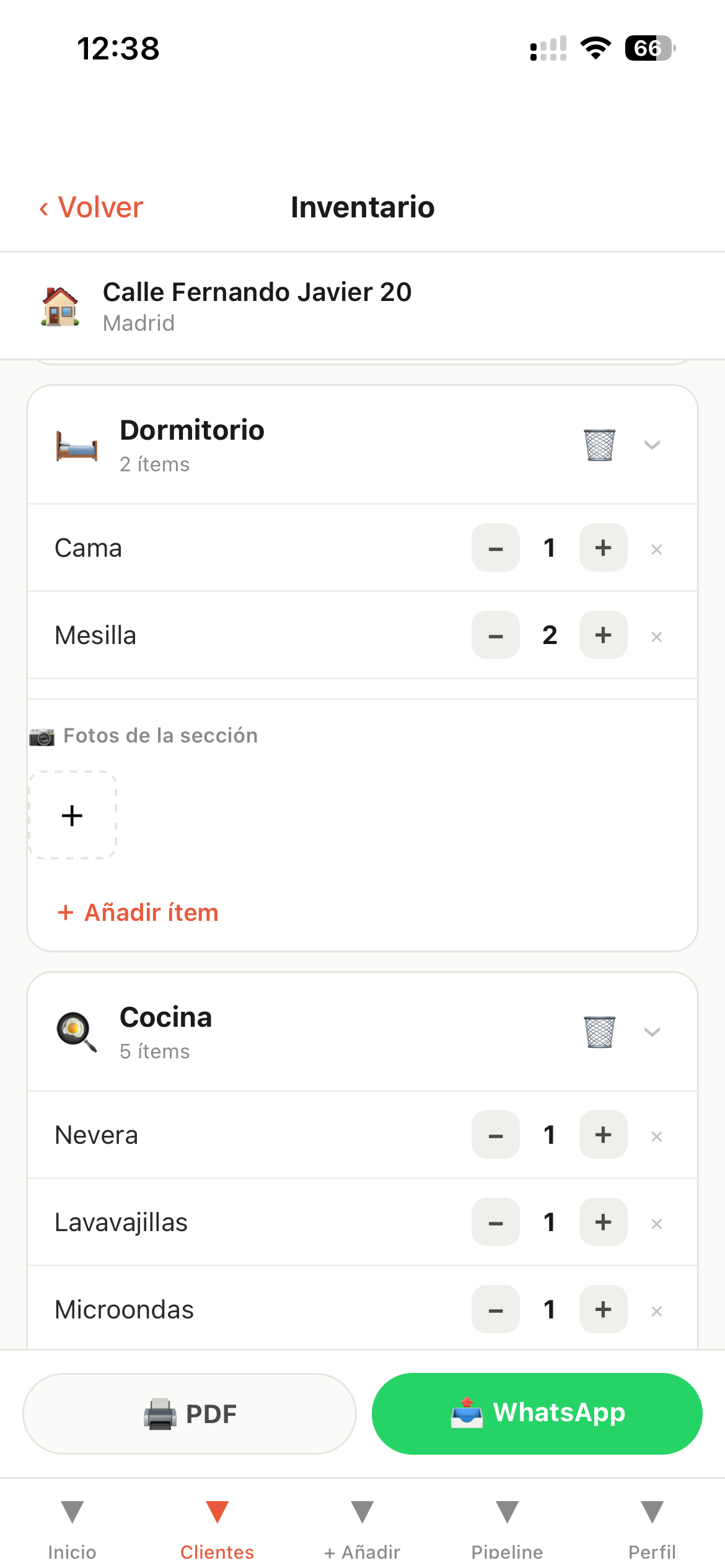
Tap Export to generate the PDF. The document includes all rooms, all items, the attached photos, and signature fields ready to sign. Share it via WhatsApp with both parties right there at the handover, and ask them to sign.
Create your property handover inventory free
PDF with signature fields. Photos included. Ready to share in 2 minutes.
Start with Fincta →Common mistakes in property handover inventories
Even agents who do create inventories often make errors that reduce their value in a dispute. Here are the four most common:
Not including photos
A list of items without photos can be challenged. Someone can always claim an item was already broken, or that the "good condition" note was wrong. Photos taken at handover are timestamped evidence. They're the difference between an inventory that holds up and one that doesn't. Take at least one photo per room — more if there are items with existing wear.
Missing appliances
The most common post-handover dispute is over a specific appliance — a washing machine, a fridge-freezer, or a dishwasher — that one party thought was included and the other thought was excluded. If there's anything in the property that could be moved out, it belongs on the inventory. When in doubt, include it.
Not getting it signed
An unsigned inventory is just a document one party created. Without both signatures, there's no acknowledgement that both parties agreed on the contents. Getting it signed takes 30 seconds — don't skip this step.
Using vague descriptions
"Sofa" is not enough. "3-seater grey fabric sofa, moderate wear on armrests" is useful. "Fridge" is not enough. "Samsung American-style refrigerator, silver, working order" is what you need. The more specific the description, the less room there is for interpretation later.
Frequently asked questions
Does a property handover inventory have legal value?
A signed property handover inventory is a contractual document and can be used as evidence in legal disputes. Its weight varies by jurisdiction, but in most countries a signed inventory — particularly one with dated photos — is accepted as proof of what was present and in what condition at handover. It is considerably stronger evidence than verbal agreements, informal emails, or listing photographs, which can be taken at any time.
Who keeps the signed inventory?
Both parties should keep a copy. In practice, the agent typically retains the original or digital version and provides a copy to the buyer or tenant at the point of signing. With Fincta, the PDF is stored against the property in the app, so you can retrieve it instantly — without searching through email archives months or years later.
What happens if an item is missing after handover?
If an item listed in the signed inventory is missing after handover, the aggrieved party can use the inventory as evidence to request its return or seek compensation equivalent to its value. The specific legal remedy depends on the type of transaction and the jurisdiction, but in all cases a signed, dated inventory makes the claim clear-cut rather than a dispute based on competing memories.